
Will Having My Drone Custom Painted Help Keep Birds From Attacking It?
A real-world DJI Mini 3 Pro experiment using matte red paint, matte clear coat, and 3M reflective markings.
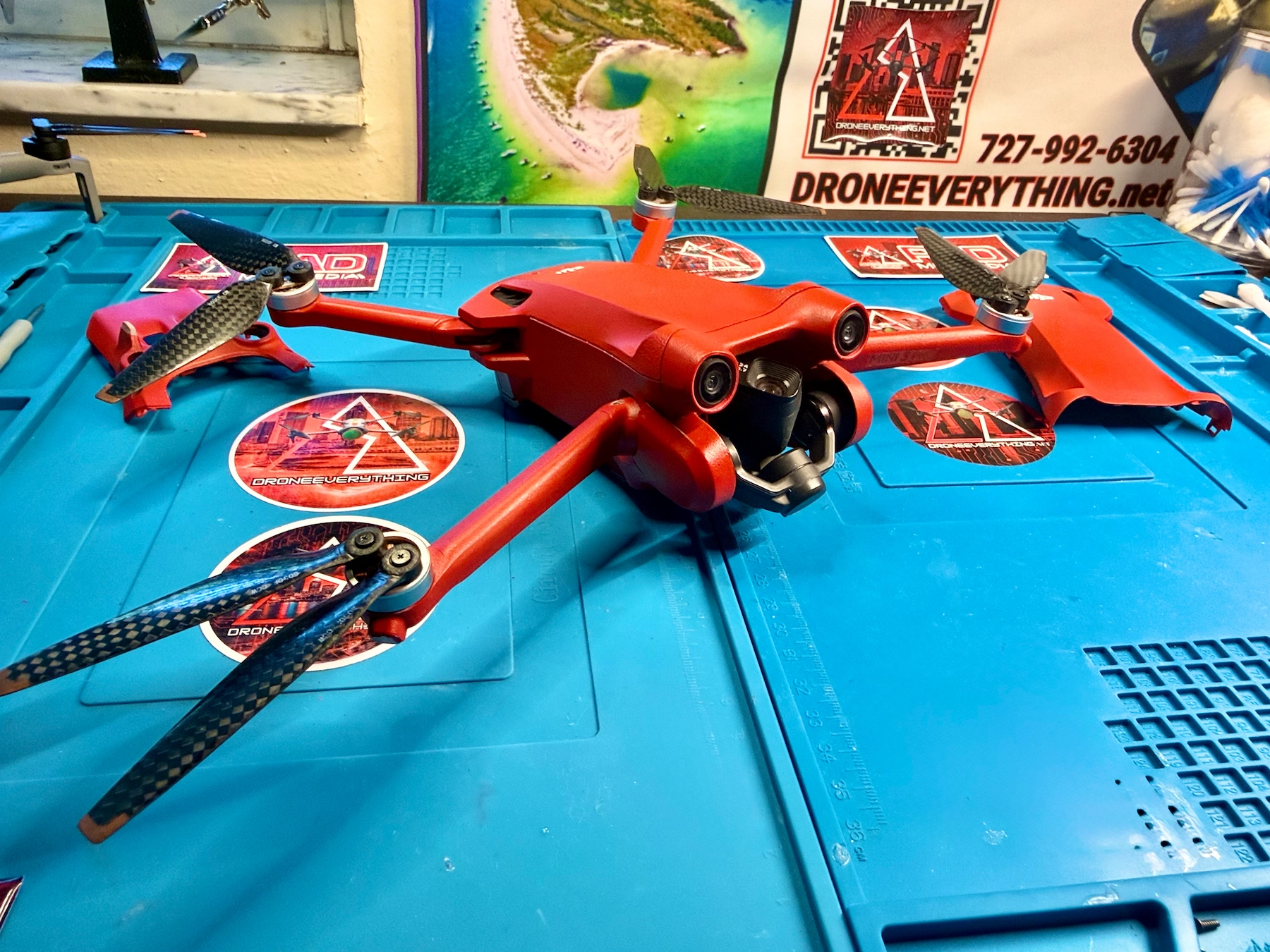
Most drones look exactly the same.
Gray. Black. White.
For years, I have flown drones throughout Florida and around the country for recreation, training, inspections, photography, video production, and testing. During that time, I have had countless encounters with birds and other wildlife.
Some ignored the drone completely. Others seemed fascinated by it. A few made me wonder if they were about to attack it.
Over time, I started noticing something. Nearly every drone I flew looked almost identical. That led to a question I could not get out of my head.
Would birds react differently if the drone looked completely different from every other aircraft they normally encounter?
Instead of debating the theory, DroneEverything decided to test it.
The Experiences That Started It All
This project did not begin because of an article I read online. It began because of years of real-world encounters.
One of the most memorable happened in downtown New Orleans. While flying, a large black bird suddenly approached the drone and began hovering nearby. It was not aggressively attacking, but it was clearly interested in the aircraft. The bird repeatedly moved in close, occasionally pecking toward the drone as if it was trying to figure out exactly what it was.
Then there were the pigeons.
My neighbor has a flock that practically lives in his backyard. All day long they travel between a bird feeder, nearby rooftops, and power lines. One day while flying a customer’s drone, approximately a dozen pigeons crossed directly through my flight path at the same altitude as the aircraft. Several flew so close that they barely missed the drone.
It was not aggressive behavior, but it was another reminder that birds and drones occupy the same airspace.
Then came the osprey.
I was training a customer and we had two drones in the air. I was teaching landing procedures while my own aircraft remained hovering nearby. When I looked up, a large osprey had positioned itself only a few feet away from my drone.
Rather than immediately leaving, it stayed there. For several minutes, I slowly backed away while continuing to record video. The osprey followed while carefully watching the aircraft. Neither one seemed willing to make the first move.
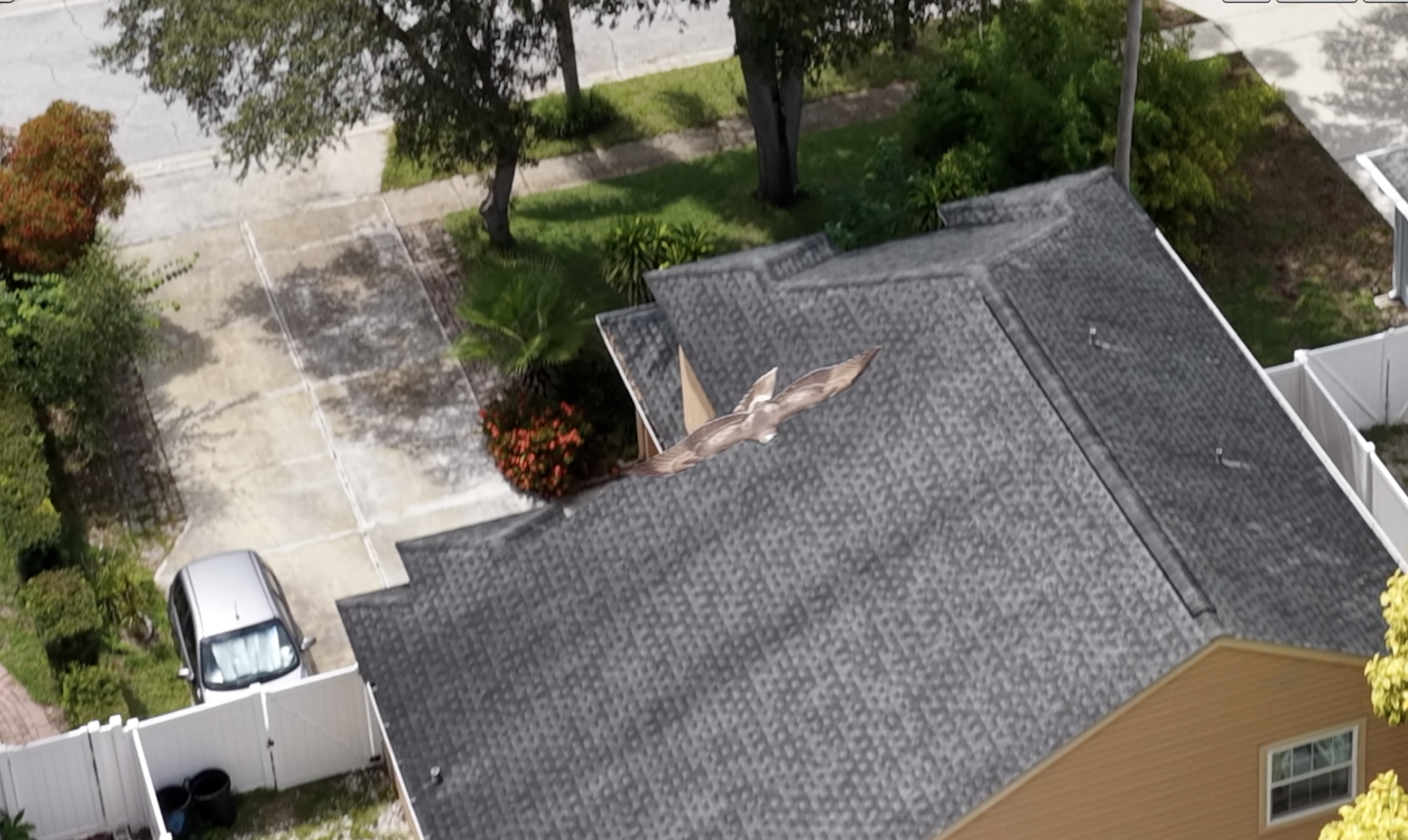
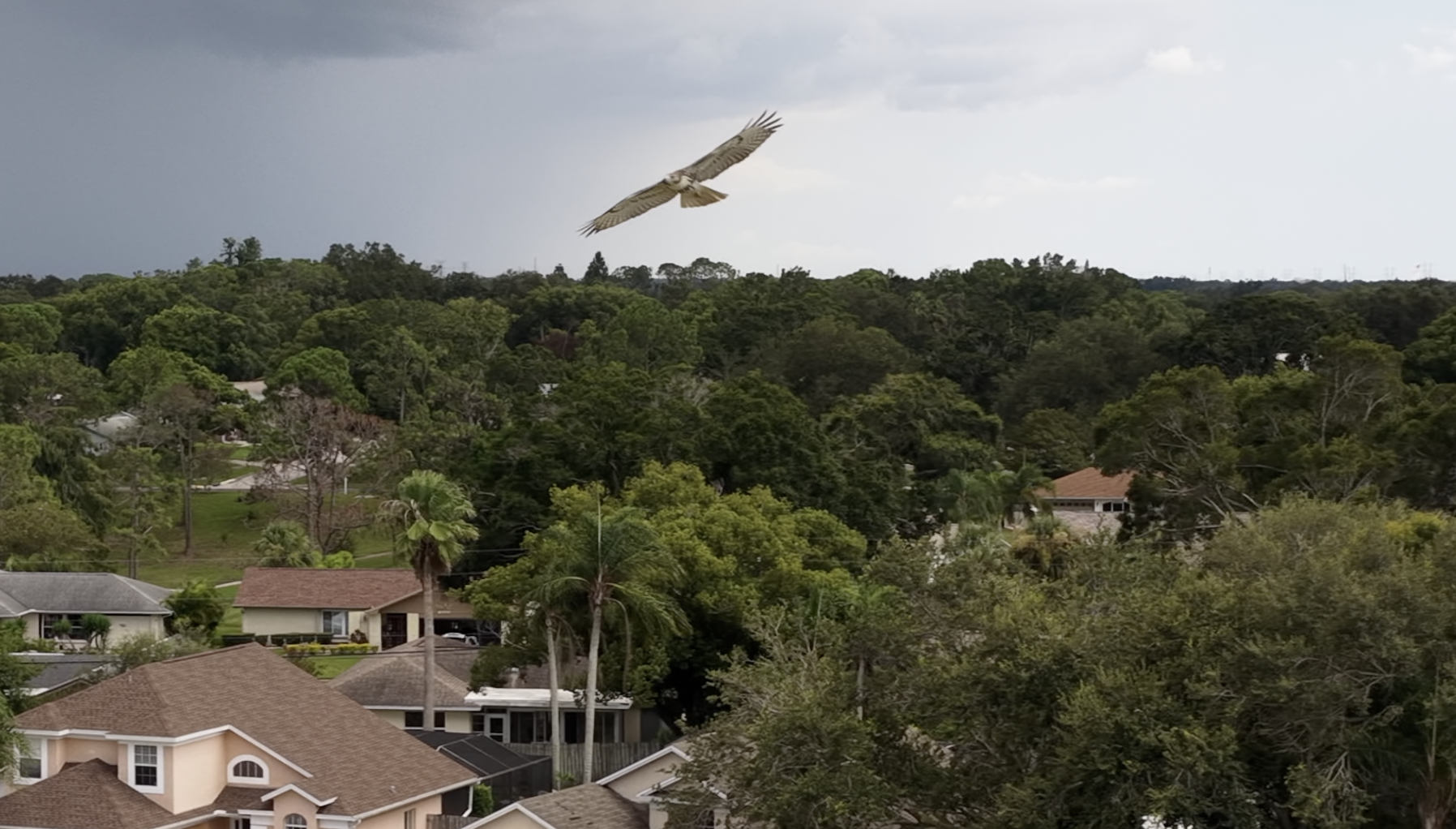
Actual DroneEverything osprey encounter photos from the drone versus osprey flight.
DroneEverything footage: drone versus osprey encounter during flight training.
Living and flying in Florida also means regular encounters with seagulls and other coastal birds. Most Florida drone pilots have watched a seagull make a low pass simply to investigate what that strange object in the sky actually is.
And while this article focuses on birds, one of my strangest wildlife encounters involved insects. Years ago, I unintentionally flew a DJI Air 2S through a swarm of bees. The aircraft came back covered in bees and bee remains after passing through the swarm. It looked like something out of a movie.
DroneEverything footage: DJI Air 2S bee swarm encounter.
Experiences like these are what ultimately inspired this project.
The Theory
What if color matters?
Not sound. Not flight characteristics. Not propeller size. Color.
Most drones are some variation of gray, black, or white. Maybe birds do not care. Maybe they do.
There was only one way to find out: build a drone that looked dramatically different from everything else in the sky and observe the results.
The Aircraft
For this experiment, I selected a DJI Mini 3 Pro. The Mini 3 Pro was chosen because it is one of the most popular drones on the market, lightweight, easy to transport, and already familiar to me from both repair and flight operations.
Why Matte Red?
The goal was not to make the drone flashy. The goal was to make it different.
I wanted a color that immediately stood apart from the traditional gray and black drones that dominate the market.
- Matte red is easy to see in the sky.
- It is easy to identify at a distance.
- It is easier to locate during recovery.
- It is uncommon among consumer drones.
- It creates a completely different visual profile.
If birds are responding to appearance, the difference between factory gray and matte red should be significant enough to notice.
Paint or Wrap?
Several people suggested wrapping the drone instead of painting it. Wraps certainly have advantages. They are removable, available in countless designs, and can be installed relatively quickly.
But for this project, paint was the better solution.
- No seams
- No lifting edges
- No trapped dirt
- No bubbles
- No shrinkage
- Cleaner appearance
When properly applied, paint becomes part of the aircraft rather than something attached to it. The finished result looks significantly more integrated than most vinyl wraps.
The Painting Process
The shell was carefully cleaned and prepared before any paint was applied.
Instead of applying one heavy coat, multiple light coats were used. Heavy paint creates problems: runs, drips, added weight, poor fitment, and uneven finish.
By building color slowly through multiple light coats, the aircraft maintained a factory-quality appearance while keeping paint thickness to a minimum.
Once the matte red finish was complete, the aircraft was allowed to dry before receiving a protective matte clear coat.
Why We Added a Matte Clear Coat
Durability.
That is the simple answer.
Drones experience constant handling: battery changes, transportation, storage, setup, and recovery.
Without protection, painted surfaces eventually show wear. The matte clear coat creates a sacrificial protective layer over the color coat while maintaining the same low-gloss appearance.
The result is improved durability without changing the overall look of the aircraft.
Why We Added 3M Reflective Markings
After the clear coat process was completed, reflective 3M material was installed.
The purpose was not simply appearance. The reflective markings provide better visibility, improved orientation, easier recovery, and additional visual contrast.
They also introduce another variable into the experiment. If birds are responding visually, reflective accents may further separate the aircraft from anything they normally encounter in nature.
Project Update: Part 2 Coming Soon
This article is the beginning of the experiment. Part 2 will document flight testing, bird encounters, pilot submissions, and early observations from the matte red DJI Mini 3 Pro.
As DroneEverything collects more data from both our own test flights and other drone pilots, the results will be organized into a follow-up article comparing bird behavior around traditional gray drones versus this custom-painted matte red test aircraft.
What Happens Next?
The aircraft is finished. Now the real testing begins.
Over the coming weeks and months, the matte red Mini 3 Pro will be flown in environments known for bird activity. Every significant encounter will be documented.
- Bird species will be noted.
- Behavior will be recorded.
- Flight location will be tracked.
- Observations will be compared against traditional gray DJI aircraft.
Will birds ignore the color completely? Will they become more curious? Will they become less interested?
At this point, nobody knows. That is exactly what makes the experiment interesting.
Final Thoughts
Innovation does not always start in a laboratory. Sometimes it starts with a simple question.
After years of encounters with pigeons, osprey, seagulls, large black birds in downtown New Orleans, and even a swarm of bees, I finally decided it was time to stop wondering and start testing.
Maybe the color will not matter. Maybe it will.
Either way, we are about to find out.
Help Us Test This Theory
This experiment does not end with one matte red DJI Mini 3 Pro. DroneEverything is collecting real-world bird and drone encounter experiences from pilots.
If you have ever had a bird follow, circle, chase, dive at, strike, or closely investigate your drone, we want to hear what happened.
- What drone were you flying?
- What color was the drone?
- What type of bird or wildlife did you encounter?
- Did it follow, circle, dive, strike, or just observe?
- Where did it happen?
- Do you think the drone’s color or appearance made a difference?
Submissions will be reviewed by DroneEverything and may be used anonymously in a future article comparing pilot experiences against the results from our matte red Mini 3 Pro experiment.
Personal contact information will not be published without permission.
Become Part of the Experiment
This is not just another website article.
DroneEverything is actively collecting real-world bird and drone encounter data from pilots across the United States and beyond.
Once enough submissions have been collected, the results will be compiled into a future DroneEverything article comparing pilot experiences against the findings from our custom-painted matte red DJI Mini 3 Pro experiment.
Whether your drone was ignored, followed, investigated, chased, or attacked, your experience could help identify patterns that no one has documented before.
If you have ever had an encounter with a bird while flying, please take a moment to share your experience below.
The more pilots who participate, the more valuable the results become.
Submit Your Drone & Bird Encounter
Help build the DroneEverything bird encounter database.
Want Your Drone Customized, Repaired, or Tested?
DroneEverything provides DJI repair, diagnostics, custom drone projects, flight training, rentals, sales, and aerial services.
Call 727-992-6304 Drone Repair Training Drone Sales Contact DroneEverything